Projectlab

Project management is key to develop and implement technology.

We build innovative learning practices to equip students with project management skills to enable societal transformation.

About

ProjectLab is an interdisciplinary research and teaching group originated from the Technical University in Denmark (DTU) with collaborators from Aalborg University and Copenhagen Business School. We share an interest in project management as a research field and projects as a vehicle for driving societal change.

Projects are particularly central to engineering. Engineering is about creating value for society and businesses by solving societal challenges through the development and implementation of technology. Most, if not all engineers, will be involved in projects throughout their education and career.

Building our unique resources and innovative learning practices, we help our students successfully participate in any kind of project, becoming reflective project practitioners and change agents.

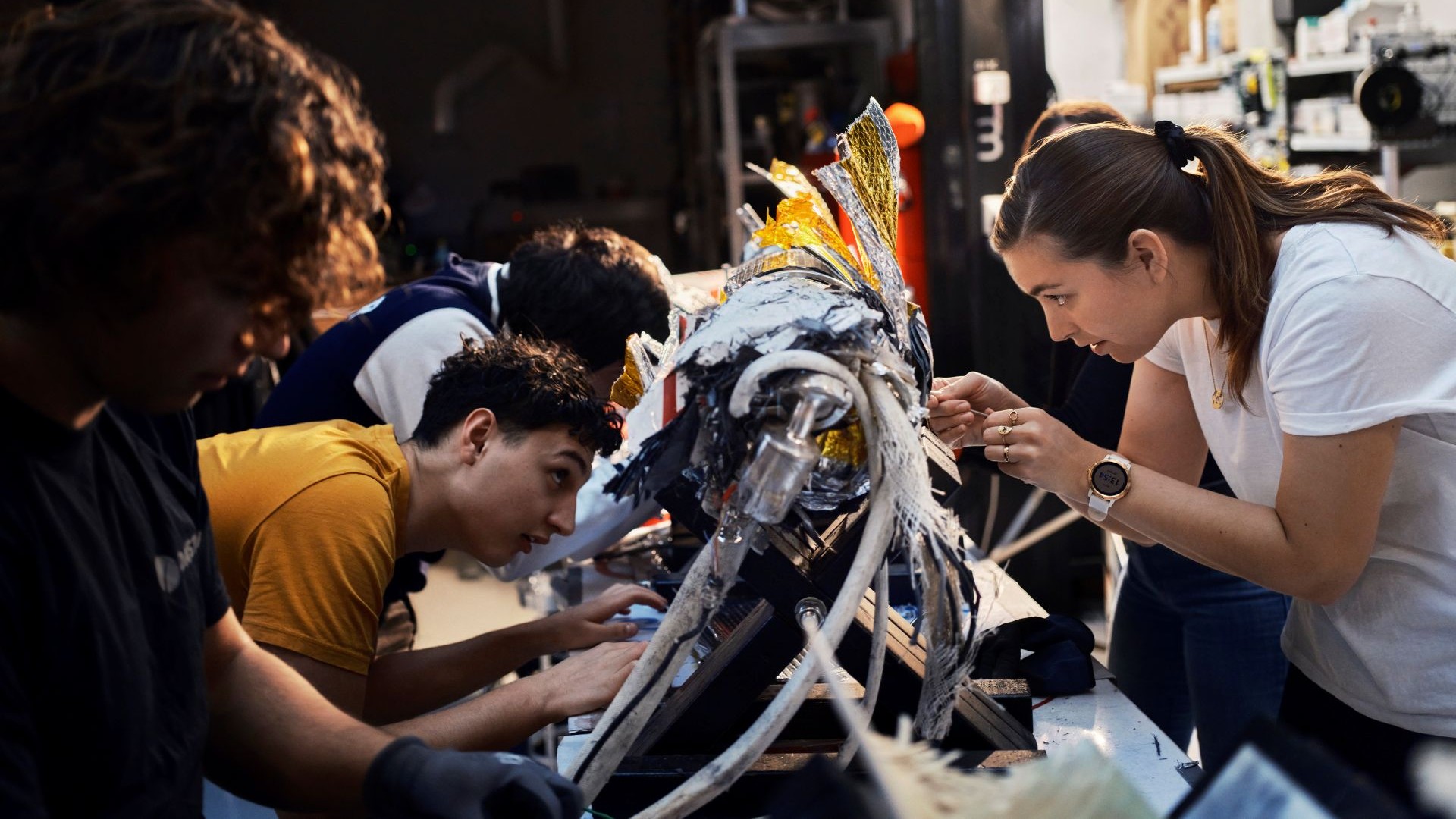
DTU Skylab
Projects have become a vital form of organizing deliberate change

Resources

Building the ESS, the European Spallation Source, a large European research facility in Lund, Sweden.

Framework

We have developed our framing of engineering projects based on the characteristics of engineering systems and inspired by the seminal works of Morgan (1997) and Weick (1995).

This has resulted in the four complementary perspectives for understanding and managing projects: purpose, people, complexity, and uncertainty.

References:
De Weck, O. L., Roos, D., & Magee, C. L. (2011). Engineering systems: Meeting human needs in a complex technological world. MIT Press.
Morgan, G. (1999). Images de l'organisation. Presses Université Laval.
Weick, K. E. (1995). Sensemaking in organizations (Vol. 3). Sage.

Purpose

Purpose is the raison d’être of a project. Projects are vehicles of change; they transform status quo into something new. Therefore, ‘the Purpose Perspective’ asks: “Why are we doing this project?” and “what are we doing?”. Purpose is about envisioning the future, by establishing a shared understanding of what the project wants to achieve together with project team and other stakeholders. From the ‘purpose perspective’, project management is about the entrepreneurial spirit with the drive to turn ideas into reality, and the diplomacy to engage and inspire people to work towards the project vision.

People

Projects are made by people and for people! That is why ‘the People Perspective’ asks the questions “Whom are we doing this for?” and “Who is doing it?”. It sees project management as a collection of individuals, with their own identities, expert knowledge, interests, feelings, personalities, friendships, etc. It is actually debatable to what extent we can ‘manage’ people like marionettes in a puppet show. Yet, it is widely recognized that project managers can influence, enable, nurture, etc. - not only project stakeholders, but also themselves. Looking at projects from a People Perspective help us see and cope with the human intricacies in projects.

complexity

When exploring the project from the complexity perspective, we are examining how to realize the purpose. Thus, we ask: “How, where and when are we doing it?” From the complexity perspective, project management is about breaking down the purpose into smaller pieces of work that can be delegated and constantly integrated. Managing from the complexity perspective is about integrating a large number of interdependent technologies, processes, people, interests, organisations, information, expertise, etc. so that they, together, work towards and achieve the project purpose. Managing the complexities of projects is the classic area of project management; it involves work breakdown structures, schedules, contracts, division of work, and so on.

uncertainty

Projects are, in many respects, a leap of faith. Project practitioners will need to navigate an inherently uncertain context and make decisions with limited information. Thus, we ask ourselves proactively “What if?” and reactively “What now?”, and “so what?’. The focus of this perspective is this lack of knowledge, or uncertainty, and how it is reduced over the course of the project, as well as the learning embedded in and after the project. Part of the uncertainty is about anticipating what could go wrong (risk), and what opportunities could emerge (opportunity), and deciding how to respond to such risks and opportunities. Not knowing is also an opportunity for learning and developing the skills of the people involved as well as organizational capabilities. 

Handbook

This book is formed by a combination of three elements:
  • The ISO 21500 standard, which represents a common language of project management.
  • The Nordic “flavour”, which complements ISO 21500 through its focus on empowerment based on understanding, social relations, and the development of future-oriented meaningful projects.
  • The four perspectives (purpose, people, complexity, and uncertainty) and context, which together provide a solid foundation to develop one’s own recipe for DOING projects, in line with both the ISO standard and the Nordic flavour.

It is not hard to find a book about project management, but it is hard to choose one! Just as an illustration, at the time of writing, a search on Amazon.com for project management provides over 50,000 hits. So, why should you read this this book?

Most project management textbooks provide normative “recipes” to managing projects. By reading these recipes, one might wonder how on Earth anyone can get it wrong?

Yet, a closer look into project practice reveals that projects are much more challenging and that the recipes are based on no more than simplifications of the project ‘reality’, and sometimes, even detached from it. Not surprisingly, studies suggest that the use of such recipes do not necessarily lead to highly successful projects.

The management of projects should be adapted to their context and the people managing them, and we can only adapt if we understand why processes and tools exist, when they can help. The tools and concepts support the management of projects but do not equate it. As George Box once said, “all models are wrong, but some are useful”.
The tricky bit is to identify when the tools and concepts are useful, and remember that, even when they are useful, they are not necessarily a truthful representation of the project, but a simplification that helps you DO projects.

Such skills require experimentation and reflection on the practice of doing projects. In other words, projects require reflective practitioners, who not know what to do but also why to do it, and continuously improve their practices.

In this spirit, we would like to provide you with the foundation to transform the well-known processes suggested in the ISO21500 standards into contextualised actions, together with others, to achieve a meaningful purpose.

The book is organised around 8 chapters. Chapter one gives you an introduction to the 3 main elements of the book. Chapter two presents various ways of defining projects, their key characteristics, and related concepts. Chapter three presents the context of projects. Hereafter follows the chapters of the four perspectives mentioned above. The final chapter outlines the principles for putting it all together and connecting the dots as a reflective practitioner doing projects.

Each of the 4 perspectives is divided into seven building blocks:

  • Illustration based on a real-life project.
  • Introduction to the perspective, why it is important, and its implication to project practice. This is the core of the chapter.
  • Key challenges and classic mistakes in project management practice to open our eyes to why it is so hard to manage projects, and what are the typical mistakes in projects, including actions that appear intuitively correct but are not.
  • Advice on how to DO it.
  • Relationship with the ISO 21500.
  • Relationship with the Nordic flavour.
  • Summary. 
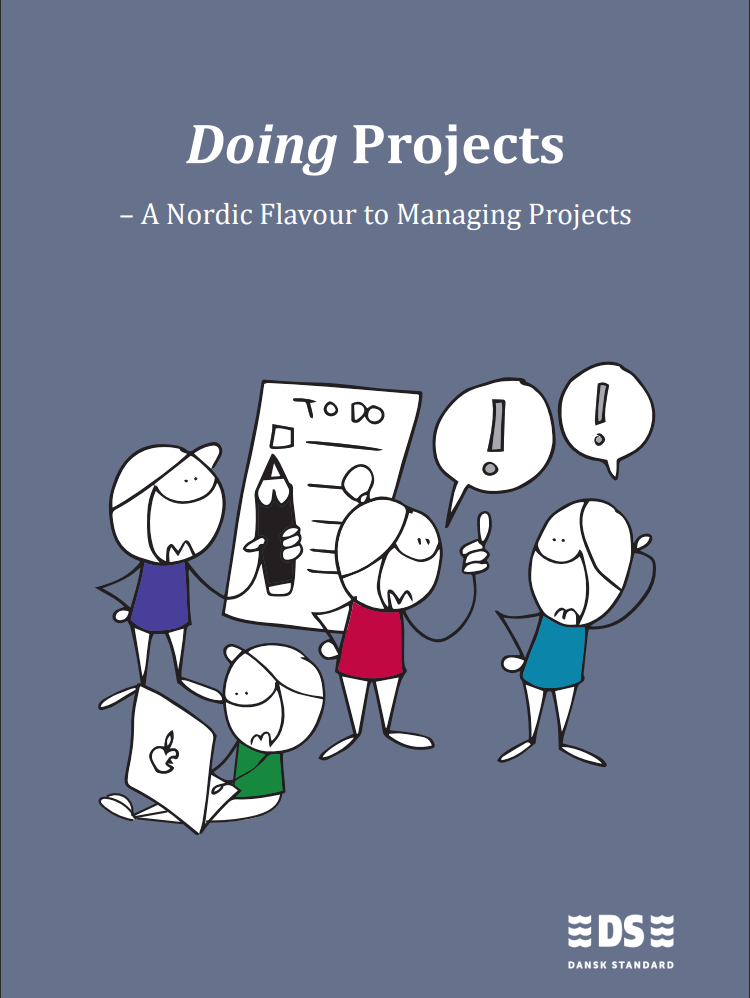
  • Book cover for 'Doing projects - A Nordic Flavour to Managing Projects'

    Unlike most of the other books, we do not offer a recipe to manage projects successfully.

    Instead, this book is the companion to the ISO 21500 & 21502 standards, Guidance on project management (hereafter referred to as ISO 21500).

    It provides a Nordic interpretation to the ISO 21500. Following the Nordic tradition, we propose a management, which centers on empowering practitioners to develop their own practices in collaboration with others.

    project management WIKI

    DTU's Project Management Wikipedia guides future project managers, participants and scholars to key tools, concepts and theories for managing projects.

    The articles are produced by students at DTU completing the course 'Advanced Project, Program & Portfolio Management'.
    go to wiki

    ISO certificate

    To strengthen your CV and career opportunities after the completion of your studies, DTU offer you the opportunity to get a certificate that documents your mastery of the international project management standards (ISO 21500 & ISO 21502).

    In collaboration with:
    Dansk Standard logo
    The cost to obtain a certificate is currently 500 DKK (including VAT), which is a registration fee for Dansk Standard (DS).

    This is significantly more accessible than various other popular PM certifications that cost between 13,000-80,000 DKK.

    We chose ISO 21500 & 21502 over other potential certificates because they represent a foundation for all other standards and have come about through intense negotiations between project organizations worldwide. In this respect, the ISO standards represent a common language to understand and engage in projects.

    To obtain the certificate you must pass our course.

    In addition, you must pass a multiple-choice test demonstrating your mastery of the project management frameworks and concepts delineated in the standard.

    If you pass the test, you will receive a certificate electronically, which gets registered in the DS database of certified project managers.

    Project Management Game

    In every course (in January and August) we "connect the dots" by facilitating a project game that challenge students to put theory into action by managing their own project.


    To win the game, the team must successfully plan a construction project, manage the resources, react to unexpected events - and manage the risks related to the team' decisions.

    In the final lecture we award the winners in the following categories:

    • The BEST Project Management

    • The BEST Client experience

    • The BEST Contractor experience

    • The BEST Fighters

    The winners of the previous courses are presented in the table below.

    Course  The BEST Project Management The BEST Client experience The BEST Contractor experience   The BEST Fighters
    2025 Jan 8-Sjællandsk Muld 9-gMendel - Building tomorrow's health care 50-Green ammonia production for reducing GHG emissions Team 33
    2024 Aug 5-Glostrup Hospital Gardens 36-Solar-powered coolers for storing vaccines 20-Launch of Samsung Galaxy Flip & Fold 6 19-AE building
    40-Offshore rocket launch
    2024 Jan 6-Replacement of pylon lighting 15-Parcel D 10-Sign production and installation 8-Renovation of Building 116
    23-The greater copenhagen light rail 20-KIRKEBJERG SØPARK
    2023 Aug 21. ITER 85 - Rapid Development of Medical Equipment 58 - Shipping Overview Solution 68 New Loop x Roskilde Festival
    2023 Jan 51. Carbon Capture on Amager Bakke 17. Den Blå Planet 14. House-8 Team 11
    38. Modernisation of S-trains 29. Heliac-Solar heat below fossil fuel
    2022 Aug Anti drone through lasers (ANDROLIZ) BørneRiget - Monster Gartner Laser for fast 3D Imaging StrateCy
    Kaktus Towers mit.dk
    2022 Jan New Scheduling System Coronapas App Bracing offshore wind farms for extreme conditions Water Works for Copenhagen
    Establishment and renovation of 7 train preheating stations
    2021 Aug Simply QMS EV Danfoss Ramboll hear office Copenhill / Amager bakke
    Biogas plant in Taiwan Lindholm dekom
    Accenture
    2021 Jan Smittestop Microman DTU study start during COVID-19 Donation project to Nicaragua
    BI for Healthcare The Hålogaland Bridge
    2020 Aug Searching for a New State of Matter Automated Greenfield Warehouse CO-RO Food Silo Sugar The SprayDryers
    OneWater Camp Adventure Skovtårnet
    2020 Jan Formula Student K.B. Hallen Lightmatter Kalundborg Symbiose
    Danish Headache Center Top Danmark AlfaLaval Green Energy
    2019 Aug Data Conversion ERP implementation Klejngaard Safety Ladder Novo Nordisk Change Control
    HYPE1 COPENHILL
    2019 Jan BARE Höge Electric ferry Artificial turf DR's Juleshow
    Luftens Helte Ungdomsøen
    2018 Aug Mercury 7 From Coal to Biomass Team Blue Nicolai from the medTrace group
    Made in Space
    2018 Jan Danfoss - Freight Audit and Pay Radiometer Fredensborg Kommune - Screen Vision Ryesgade skole
    2017 Aug Portland Tower Building 409 at DTU Europe-Skolen
    Lægernes pension IT system transition
    2017 Spring Dr. Evil’s Lair NAChOS   Wind (Group 4) 
    2016 Spring WYPE 2 Rambøll - Waste Incineration Plant WindScanner

    Project canvas

    Project Canvas is a visual tool that improves communication in project teams and provides a simplified project overview. 

    Publications

    People

    Christian Langhoff Thuesen

    Christian Langhoff Thuesen Associate Professor Department of Engineering Technology and Didactics Mobile: +45 61679131

    Josef Peter Helmut Oehmen

    Josef Peter Helmut Oehmen Associate Professor Department of Civil and Mechanical Engineering Phone: +45 45256250

    Mahmoud Al-Subaihi

    Mahmoud Al-Subaihi Associate Professor Department of Engineering Technology and Didactics Mobile: +45 22844734

    Andreas Claus Hansen

    Andreas Claus Hansen Industrial PhD Student Department of Civil and Mechanical Engineering

    Andy Mattulat Filipovic

    Andy Mattulat Filipovic Research Assistant Department of Civil and Mechanical Engineering

    Bjarke Nielsen

    Bjarke Nielsen Associate Professor Department of Engineering Technology and Didactics Mobile: +45 93511188

    Daniel Woodier

    Daniel Woodier Postdoc Department of Engineering Technology and Didactics

    Iben Stjerne

    Iben Stjerne Associate Professor Department of Engineering Technology and Didactics Mobile: +45 28180686

    Kemo Usto

    Kemo Usto Postdoc Department of Engineering Technology and Didactics Mobile: +45 93510485

    Simone Dalvang Fogh

    Simone Dalvang Fogh Industrial PhD Student Department of Engineering Technology and Didactics

    Julia Köhler

    Julia Köhler PHD Student Department of Engineering Technology and Didactics

    Alumni

    Joana Geraldi

    Joana Geraldi Associate Professor CBS, Department of Organization, Centre for Organization and Time (COT)

    Verena Stingl

    Verena Stingl Assistant Professor Metroselskabet

    Jakob Brinkø Berg

    Jakob Brinkø Berg Technical Project Manager Campus Service Mobile: +4551157473

    Courses

    We offer project management courses for all engineers, practitioners as well as academics.

    Project-based production: Planning and control of construction projects

    The course aims to develop competencies for the student to plan and manage project-based production of construction and infrastructure by integrating management areas such as time, cost and quality throughout the construction life cycle from the initial conceptualization to the final handover.

    Project Management - Tools and practical management

    The course learning objectives are to introduce diploma engineer students to project tools and project leadership. The project tools consist of methods and tools for planning and continuous follow-up on project goals, project progress, risk assessment, stakeholder analysis and project budget.

    Project Leadership - Leadership, Flow and Impact

    The aim of the course is to heighten the students' understanding of their role as project managers with focus on impact, flow and leadership.

    Project Management (3 weeks course)

    The general purpose of the course is to enable you to participate in projects and critically and appropriately apply project management theories, concepts and tools in practice. You will have unique insights into how project management is practiced through the analysis of a "real" world project. You will also experience the role of project manager as each student will be responsible to manage at least one day of the group work, i.e. to be the ‘Project Manager of the Day’.

    Project Management (3 weeks course)

    The general purpose of the course is to enable you to participate in projects and critically and appropriately apply project management theories, concepts and tools in practice. You will have unique insights into how project management is practiced through the analysis of a "real" world project. You will also experience the role of project manager as each student will be responsible to manage at least one day of the group work, i.e. to be the ‘Project Manager of the Day’.

    PhD Summer School on Megaproject Management

    How do we lead the professionalization of a multi-industry stakeholder network?

    The standards that owner organizations set regarding their own professionalism, the level of training and education at all levels in their own and their contractors' organization, their willingness to take leadership roles both towards policymakers and regulators, as well as towards their contractor base with their strong economic realities – these are all factors where owner organization can take leadership positions – or accept a vacuum.

    To this end, we have established a PhD Summer School between Femern A/S and DTU.

    Project Management 

    Engage critically with theories and practices to improve your understanding and practice of Project Management.

    Team Management

    The purpose for the student is to acquire knowledge, skills and competencies to lead processes and initiatives that develop team collaboration, efficiency and performance.

    Communication and Team Relations

    The aim of the course is to heighten the students' understanding of their role as project managers and the added responsibility to make the cooperation and the communication between the project participants function in the best possible manner, such that you become co-players in regard to the project.

    Project Strategy and Organization

    The purpose of this module is to develop the students competences and skills for analysing and understanding the organisational structure and the organisational constraints for projects, including using this knowledge to lead a project or a project portfolio.

    Management of Sustainable Construction 1 - the Project

    The course focuses on management of sustainability in the construction project, from the first design sketches through detailed planning to execution, and on where in the process choices are made of decisive importance for the sustainability of a construction project.

    Agile projects

    The purpose of this module is to provide the student with theoretical ballast as well as concrete tools for completing successful agile projects.

    Contact

    Christian Langhoff Thuesen

    Christian Langhoff Thuesen Associate Professor Department of Engineering Technology and Didactics Mobile: +45 61679131

    Thanks

    With help from our fabulous teaching assistants: 

    Emmanuel Emefu (Aug 2025), Pedro Correia (Aug 2025), Søren Møller Jørgensen (Aug 2025), Lisa Pavlenko (Jan 2025), Melisa Nielsen Yasar (Jan 2025, Aug 2025, Imad U Din Ahmad (Jan 2025), Astrid Machholm (Jan 2025, Aug 2025), Niclas Juul Schæffer (Jan 2025), Janus Leonard Rasmussen (Aug 2024), Emre Erdinc (Aug 2024, Jan 2024), Jinyuhan Wang (Jan 2024), Alper Nedimoglu (Aug 2024, Jan 2024), Esben Skovmand Elnegaard (Aug 2024, Jan 2024), Jinyuhan Wang (Jan 2024), Victor Gustav Harbo Rasmussen (Aug 2025, Aug 2024, Aug 2023), Benjamin Noah Lumbye (Aug 2025, Aug 2024, Aug 2023), Alfredo Jose Ojeda Diaz (Aug 2023), Julia Köhler (Aug 2023), Marie-Louise Birch Jørgensen (Aug 2024, Aug 2023), Emilie Sofie Engdal (Aug 2023), Simon Prisholm Skrøder (2023 Jan), Mejse Hasle Nielsen (2023 Jan), Kuan-Yeh Chou (2023 Jan, Aug 2023), Ekky Tammarar Alfian (2023 Jan), Anne Sofie Rask Fribert (2022 Aug, 2023 Jan, Aug 2023), Haimi Qiu (2022 Aug), Kristian Mejer Daugaard (2022 Aug, 2023 Jan), Isidoros Pantelidis (2022 Aug, 2023 Jan), Jorge Guerra Pelaez (2022 Jan, 2022 Aug), Hanna Juul-Andersen (2022 Jan, 2022 Aug, Jan 2023), Monika Margrethe Skadborg (2022 Jan, 2022 Aug), Dorothea Georgiadou (2022 Jan, 2022 Aug), Yasmina Tolsgasard (2022 Jan), Arvind Chauhan (2022 Jan), Sara Kathrine Højer Krogh (2022 Jan), Cecilie Møller Madsen (2020 Aug, 2021 Jan & Project Ecosystem), Marlene Schmidt Pedersen (2020 Aug, 2021 Jan & Project Ecosystem), Mohammad Nabil Ahmad (2021 Jan), Tais Peter Christiansen (2021 Jan, 2022 Jan), Irene Gomila Bertazioli (2021 Jan), Shylendhar Gunasekaran (2021 Jan), Prasad Jagtap (2021 Jan), Neda Rastkhiz Paydar (2021 Jan), Casper Rastgoie Veje (2021 Jan), Wenjian Zhu (2021 Jan), Aditya Surendran (2020 Aug & Project Ecosystem), Márton Széll (2020 Aug & Project Ecosystem), Frederik Seeberg (2020 Jan & Aug), Phillip Aarestrup (2020 Jan & Aug), Mie Cuhre Anker (2020 Aug), Andre Mendes de Carvalho (2020 Aug), Simon Koimaru Skaarup (2019 Aug & 2020 Jan), Nikolaj Weinell (2019 Aug & 2020 Jan), Lars Hinge (2019 Aug), Anish Rao Lakkaraju (2019 Aug), Markus Glavind (2018 Aug, 2019 Jan & Project ecosystem), Theodosios Kokotas (2018 Aug, 2019 Jan & Project ecosystem), Yassine Macine (2019 Jan & Aug), Andreas Rønne Stokholm (2018 Aug & 2019 Jan), Hani Mike Rae Selim (2018, 2019 Spring), Raquel Aparício Guterres Valente (2019 Spring), Emil Nørregaard (2018 Aug), Tue Nørgaard Lindhart Thomsen (2018 Spring), Nicoline Hvidt (2018 Spring), Steffen Hansen (2018 Spring), Jeppe Sidenius (2017 Aug), Arnaldo Landivar Taborga (2017 Aug & 2018 Spring), Jonathan Emil Gundorph Jansen (2017 Aug), Amalie Pernille Rasmussen (2017 Aug & 2017 Spring), Anne Sloth Bidstrup (2017 Spring), Sarah Schultz Beeck (2018 Aug, 2018 Spring & 2017 Spring), Rasmus Nøddegaard Hansen (2017 Spring), Evdoxia Pertsinidou (2017 Autumn), Joachim Andersen (2017 Spring, 2016 Aug & 2016 Spring), Jessica Linda Ruina (2016 Autumn), Peter Egeskov Larsen (2016 Spring), Vibeke Hvidegaard Petersen (2016 Spring), Jonas Hammer (2016 Spring & 2015 Aug ): Developer of ProjectGame, Mette Louise Christensen (2015 Autumn), Michelle Schrøder Sørensen (2015 Aug), Nathalie Lückstädt Nielsen (2015 Aug), Sarah Romane Bourdiaux Terp (2016 Aug, 2016 Spring & 2015 Aug), Ebou Touray (2016 Spring & 2015 Spring), Rosa Elisabeth Lindqvist (2016 Spring & 2015 Spring): Handbook, Marc Dose (2016 Spring, Aug 2015 & 2015 Spring): Video editing, Kristine Maria Clemmensen-Rotne (2015 Spring & 2015 Autumn), Anders Systad (2015 Spring & 2014 Spring), Amalie Skytt Petersen (2015 Spring & 2014 Spring), Cecilie Krosby Lütken (2015 Spring & 2014 Spring): Handbook, Anna Maria Greve (2014 Spring & 2015 Autumn): Handbook, Amalie Kaysen (2014 Autumn), Cecilie Bonde Christiansen (2014 Spring), Christian Østerbye (2013 Spring), Lars Balstrup Jørgensen (2013 Spring), Annemette Bøgedal Jensen (2013 Spring), Morten Andersen (2013 Spring), Michael Vaisgaard Thorslund (2012 Spring), Søren Nygaard Pedersen (2013 Spring & 2012 Spring), Erik Runge Madsen (2012 Spring), Andreas Houmann (2012 Spring), Søren Højland Boesen (2014 Spring, 2013 Spring & 2012 Spring), Troels Kristian Ankjær (2012 Spring), Cecilia Fernandez (Handbook), Marina Cholakova (Handbook)...